I Could Barely Stand After My Amish Wedding — The Doctor Asked Who Told Me It Was Normal
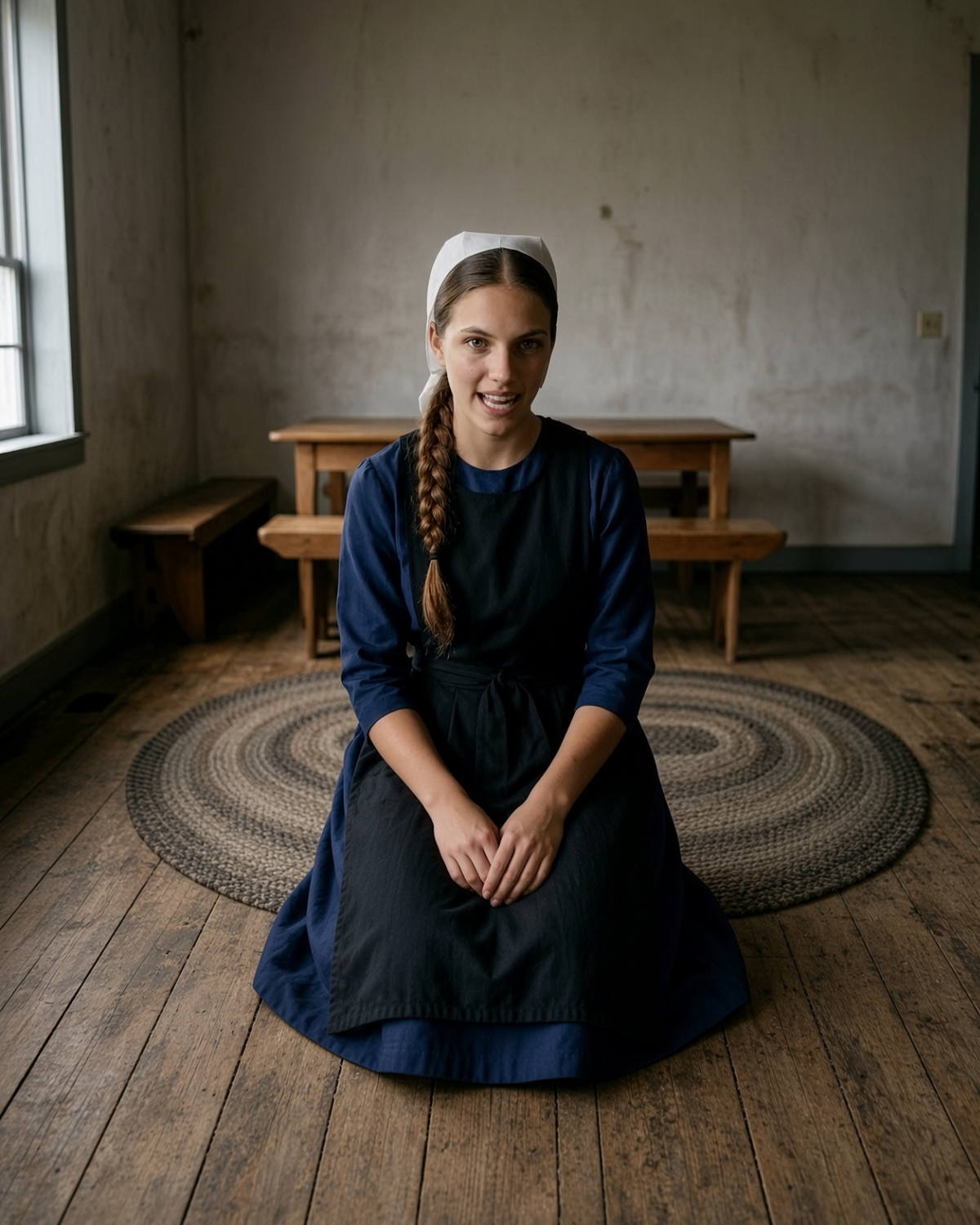
The rain hit the narrow window in that county hospital like it was trying to get in, and I sat on the examination table with my mother’s dark stockings still on my legs and a blue envelope on the counter beside me that had been hidden from me for almost two years.
I was nineteen years old and three mornings married, and I could not stand up without gripping the edge of the table with both hands.
The doctor, a narrow man named Harlan with silver-rimmed glasses, stood by the sink and washed his hands for a long time before he turned around.
“Rebecca,” he said, very quietly, “who told you this was normal?”
My husband was out in the hallway with our bishop. My mother had refused to come inside the room. And the envelope, the one with my name written across it in Dr. Harlan’s own hand, had finally made it back into the light after two years of being passed around like a secret nobody wanted to hold for too long.
I knew that whatever answer I gave was going to cost somebody a home.
I just did not understand yet that the home they had been protecting was never meant to be mine.
To explain how I got to that room, I have to go back to the summer I turned seventeen, when I still believed pain was one of the private duties of being a good daughter.
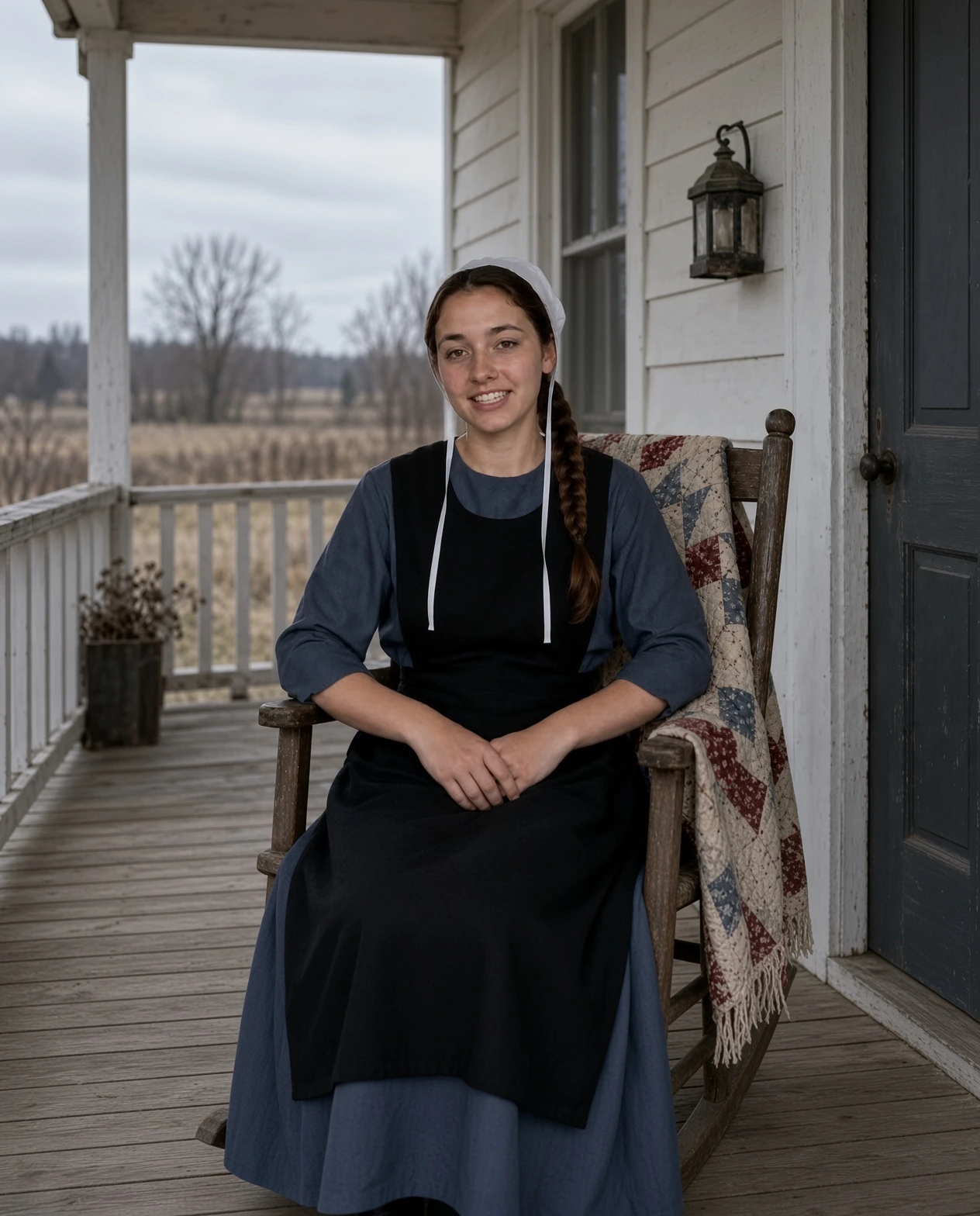
I grew up in the Alder Creek District in rural Ohio, and I cannot speak for every Amish family or every bishop, because I only know what was taught in our kitchen and what happened when a frightened family started treating silence like faith.
My father died when I was fourteen.
That left my mother with six children, a small farm, and debts she could not pay, and my older sister Miriam was already married and gone, so I worked beside Mother at the stove, at the wash line, and out in the fields, because usefulness was the one thing that softened her face.
The first time I folded from pain, I was carrying jars down into the cellar.
I remember the cold step beneath my knees and the smell of vinegar from a broken jar, and I remember Mother finding me with both hands pressed against my middle.
“You are becoming a woman,” she said.
I told her I had never felt anything like it.
“That is because no one warns girls properly. It passes.”
It did pass, after an hour or two.
Then it came back the next month and the month after that.
Sometimes I worked straight through it. Sometimes I got so dizzy that the room seemed to narrow around me like a hallway with the walls coming in, and Mother would make raspberry leaf tea, set a warm brick near my feet, and tell me not to mention it outside the family.
Aunt Verna, who helped women during births and illnesses, came once after I fainted near the washhouse.
She pressed a hand to my forehead and asked Mother how long this had been happening.
Mother answered before I could.
“She is delicate when she is tired.”
Aunt Verna looked at me for several seconds.
“Pain that takes the color from a girl’s face should be examined.”
Mother’s mouth tightened.
“By whom?”
Verna did not answer.
In our district, the nearest licensed physician was twelve miles away, and visiting him meant money, questions, and a written record, and those three things frightened Mother more than pain she could not see.
That autumn, I collapsed in Clara Hess’s dry goods store.
Clara was not from our church. She put me in her truck and drove me to the county clinic, and for the first time in my life, somebody asked me to describe the pain instead of telling me what it meant.
Dr. Harlan did not speak unkindly, but he became serious after he examined me.
He said he could not be certain without further tests, but he was concerned there might be a cyst or another condition that required a specialist.
Mother arrived before he finished speaking.
She stood beside the door with her bonnet strings trembling against her coat, and I thought she was frightened for me.
I did not understand that she was also frightened of the bill, the farm, the bishop, and the possibility that a diagnosis might travel faster than the truth.
Dr. Harlan placed several papers in a blue envelope and handed them to her.
“She should be seen within the month,” he said.
Mother asked whether I was in immediate danger.
“I cannot promise she is not.”
That sentence stayed with me.
Mother later said I had remembered it incorrectly.
On the ride home, she kept the envelope beneath her apron and promised we would return after harvest.
Winter brought another excuse, then spring brought another, and I wanted to believe her, because a daughter who doubts her mother needs somewhere else to place her trust, and I had nowhere else.
The blue envelope disappeared.
A year later, Bishop Eli Yoder began visiting our farm.
Conversation stopped when I entered the room.
I caught only pieces, the mortgage, the South Field, the Miller family, a promise my father had made, and then Amos Miller began calling.
He was twenty-four, quiet, and from the dairy farm adjoining ours.
The first time we spoke alone, he asked whether I preferred pear trees or apple trees.
I said pears.
Two weeks later, he planted a pear tree near the house where he expected to bring a wife.
Mother saw kindness in that tree.
I saw escape from the fear that our farm would be sold.
Bishop Yoder saw something else.
Two properties joined, one debt settled, and another family kept within the district.
Nobody said I was required to marry Amos.
They only explained what might happen if I did not.
Mother could lose the field, my brothers might be hired out, and my father’s name would carry unpaid promises all the way to the grave.
By the time Amos asked, refusal felt like setting fire to my own kitchen.
I said yes.
The first warning came during our engagement.
I had another spell while helping Mother mend quilts, and I bent over the frame until the pain eased, and Amos had arrived at the door and seen me.
He asked whether I was ill.
Mother answered, “Women have their times.”
His eyes stayed on me.
“Will it interfere with the household?”
I felt ashamed, though I had done nothing.
Mother said, “Rebecca has never neglected her work.”
Amos nodded.
Then he told me, in a gentle voice, “After marriage, matters of the body should remain between husband and wife. People make trouble from what they do not understand.”
I heard privacy in his words.
I did not yet hear control.
Six weeks before the wedding, Miriam pulled me into the pantry while Mother and Amos were out in the barn.
“Did she ever take you back to the county doctor?”
I stared at her.
She lowered her voice.
“The day you fell at the store, there was a blue envelope.”
I asked how she knew.
“Mother asked me to burn it last winter.”
“Did you?”
“No. I put it in her sewing chest.”
Before I could ask more, the latch lifted.
Mother stood there holding a basket of eggs.
Miriam stepped away from me.
Mother did not raise her voice.
“Your husband is waiting at home.”
Miriam’s face changed.
It was not fear exactly. It was recognition.
She left before supper.
That night I opened Mother’s sewing chest.
The blue envelope was gone.
Mother threaded a needle without looking up.
“Your sister enjoys turning worry into importance.”
“Was the doctor concerned?”
“He saw a poor family and an opportunity to charge us.”
“Why did Miriam say you wanted it burned?”
Mother pulled the thread through the cloth.
“Because paper outlives explanations.”
At the time, I thought she meant the doctor had exaggerated.
Now I know she was warning me without intending to.
Three weeks before the wedding, the pain returned sharply.
Outside the meeting house, I asked Aunt Verna whether it was normal to be unable to stand straight.
She looked toward Mother, who was speaking with Bishop Yoder.
“No,” she said.
It was the first plain answer anybody had given me.
“Then help me.”
Her hand closed around mine, but only for a moment.
“After the wedding, your husband can decide what care is needed.”
“You said I should be examined.”
“I said many things before I understood your family’s position.”
“What position?”
She would not answer.
That was my failed attempt to seek help, and it was also the moment I learned that a person may recognize danger and still choose the comfort of obedience.
Our wedding was held on a cold Thursday in November.
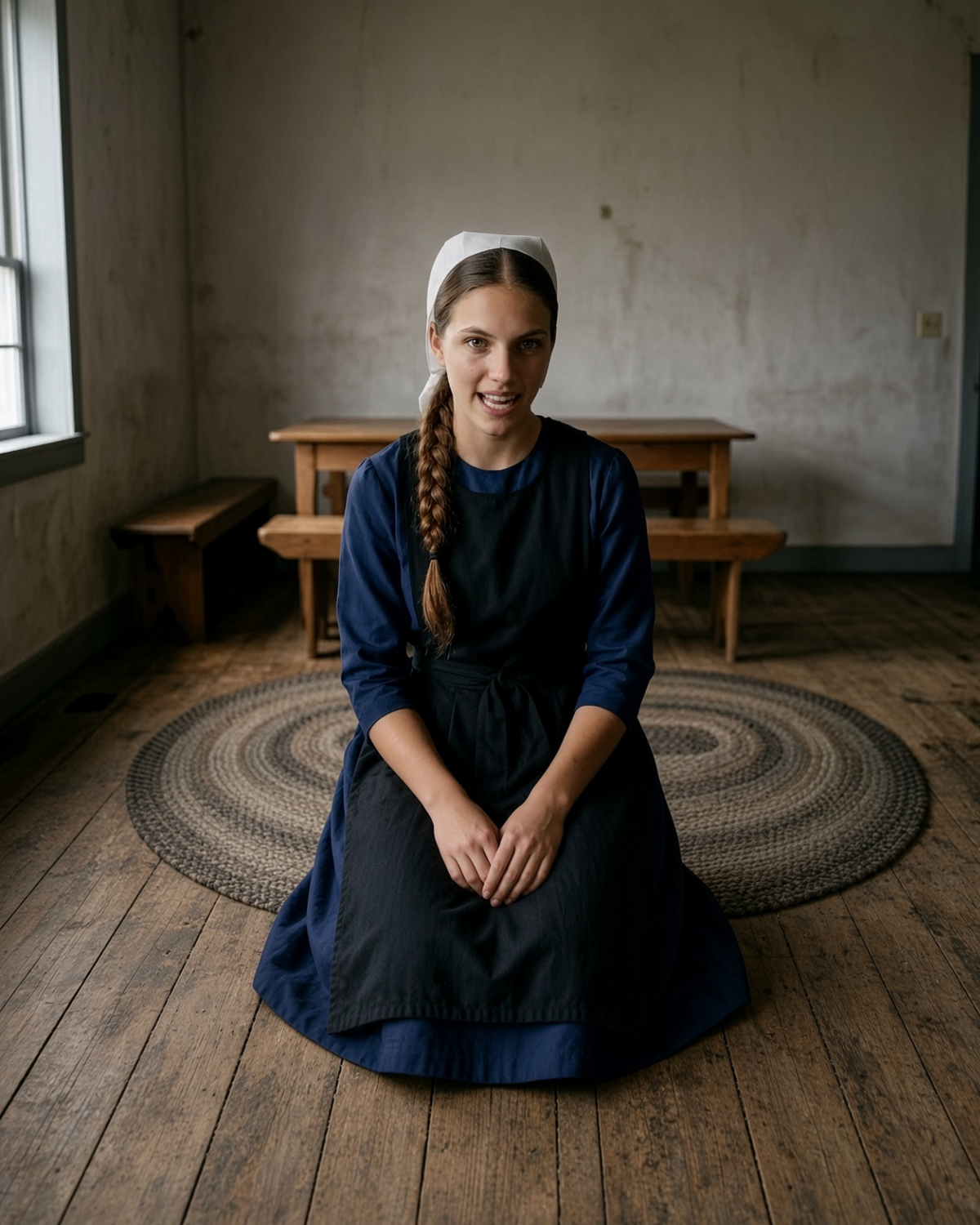
The house filled before sunrise. Benches scraped the floor, coffee boiled, and my dark blue dress hung loosely because I had grown thin.
As she fastened the hooks at my back, I asked one last time whether Dr. Harlan had said I was sick.
Her fingers stopped.
Then she continued fastening the dress.
“You are nervous,” she said.
She did not meet my eyes in the mirror.
During the service, Bishop Yoder spoke about duty and the joining of households, and halfway through, the familiar pressure returned.
By the meal, I could barely swallow, but I kept serving until a bowl slipped and gravy ran over my hand.
Miriam caught the bowl before it fell.
“You are white as flour,” she whispered.
Mother appeared between us.
“She has not eaten.”
Miriam stared at her.
“That is not why.”
For one brief moment, I thought my sister would say everything aloud.
Instead, Mother took her by the elbow and led her into the pantry, and I never heard what was said, and Miriam left before the final guests.
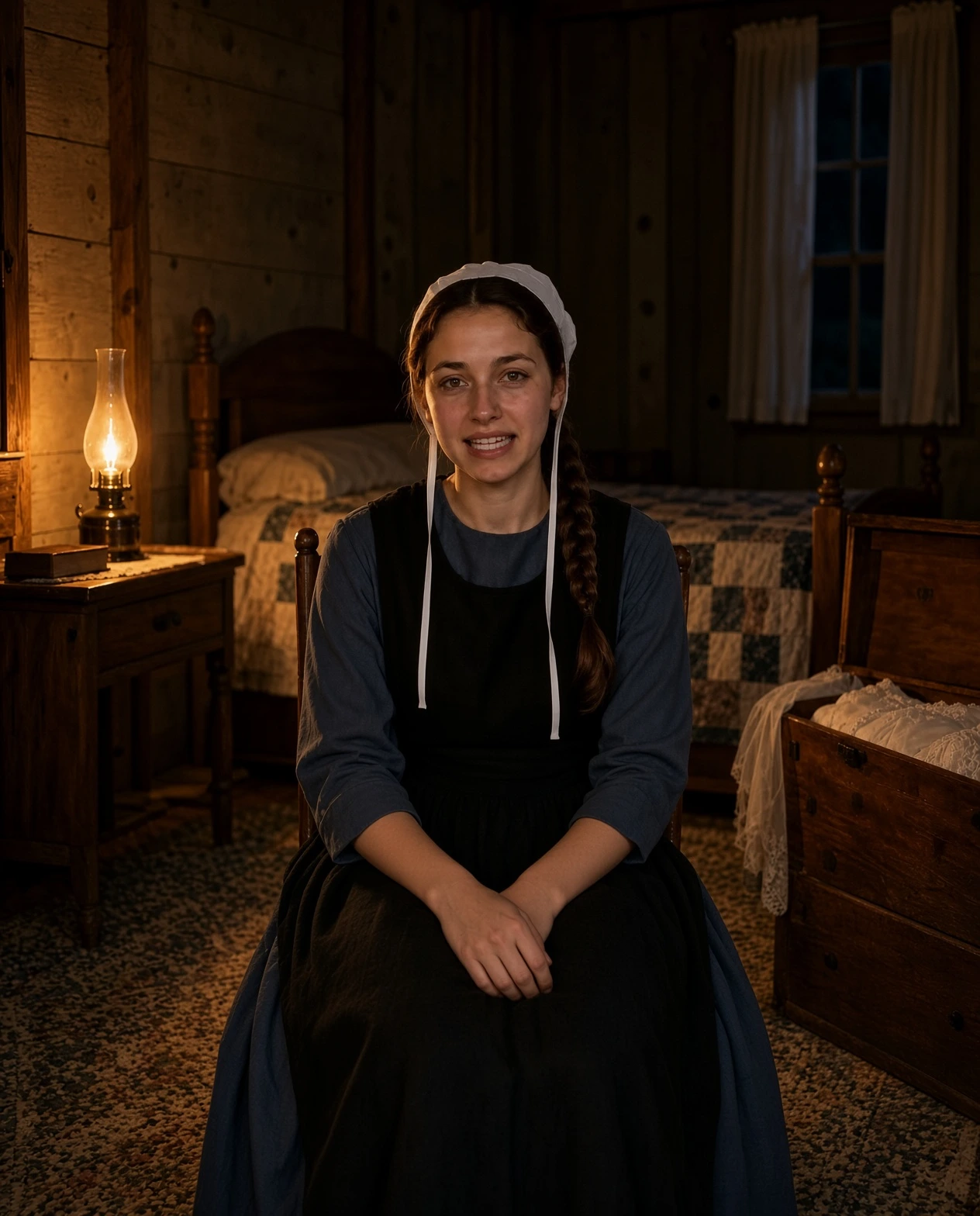
That evening, in the small house beside the Miller farm, I was shaking from fear and pain.
I will not describe what belongs to the privacy of that room.
By midnight, I could not straighten my back, and when I tried to stand, my knees gave way.
Amos helped me to the bed. His face showed alarm, but his words were measured.
“My mother said brides sometimes suffer at first.”
I asked him to fetch a doctor.
“Tonight?”
“Yes.”
He touched the edge of the blanket, not my hand.
“People will ask what happened.”
“I do not care.”
“I do.”
Marriage had taken my right to decide which pain justified questions.
By morning, I was feverish.
Mother came carrying broth, and I thought she had come because Amos had told her the truth.
She sat beside me and said, “The first days can be difficult.”
“This is not difficulty.”
Her eyes moved to the window.
“It will settle.”
“Who told you?”
She folded the cloth over the broth jar.
“Women know.”
I asked whether the county doctor had warned her this might happen.
She stood so quickly the chair leg struck the floor.
Amos entered before she answered, and Mother looked at him, and something passed between them, something practiced, not new, and that glance frightened me more than the pain.
After she left, I asked Amos what he knew.
He said, “Only that you had female troubles.”
“Did she show you the doctor’s paper?”
“No,” he answered too quickly.
The next afternoon, while Amos was in the barn, I searched for money to hire a driver.
In his desk, beneath receipts and a deed map, I found the blue envelope.
My name was written across it in Dr. Harlan’s hand. The seal had been opened.
Inside were the referral, a bill, and a note from Mother to Amos.
She wrote that the doctor suspected a serious condition but had not proved it, and that my symptoms must remain private until after the marriage.
She reminded him that Bishop Yoder had approved the land agreement and the Millers would take over our debt.
At the bottom she had added one line: “Rebecca obeys when she understands what others stand to lose.”
Until that moment, I had believed the wedding might save my family.
The note showed me that my family had used that belief to save the wedding.
A shadow crossed the desk.
Amos stood in the doorway. He did not ask what I had found.
He said, “Your mother believed the doctor was uncertain. You told me you had never seen this. I did not want you frightened before the vows.”
“You knew I might be ill.”
“I knew there had been pain.”
“You knew enough to hide the paper.”
He sat and covered his face.
Then he told me my father had borrowed from his family after two bad harvests, and Bishop Yoder had proposed marriage as a way to join the properties and settle the debt without public shame.
Amos said he had not wanted a wife forced by debt.
“Then why did you agree?”
“Because I thought you wanted the same thing.”
“I wanted my mother to keep her home.”
He looked at the envelope.
“Is that so different?”
It was different, but at nineteen, in pain and newly married, I could not yet explain why.
Amos promised to take me to Dr. Harlan on Monday if I was not better.
He said we would tell the bishop only that I had developed a fever after the wedding.
He burned Mother’s note in the stove but let me keep the referral.
The promise gave me enough hope to survive until Monday.
On Sunday evening, Bishop Yoder came to the house.
He did not enter my room. He spoke with Amos in the kitchen, but the walls were thin.
“A visit now will invite talk,” the bishop said.
“She cannot stand.”
“Then she should remain in bed.”
“The doctor warned them before.”
A long silence followed.
Then Bishop Yoder said, “That paper has no authority here.”
I waited for Amos to defend me.
Instead, he asked, “What of the land agreement if she leaves?”
The room seemed to tilt.
The bishop answered, “A wife belongs in her husband’s care. Keep her home until the household is settled.”
Until then, I had believed Amos was trapped beside me.
Now I understood he was guarding what he had gained.
He came into the room and said Monday was too soon.
I held out the referral.
“You promised.”
“After the fever breaks.”
“And if it does not?”
He looked at the paper, then at the door.
“I will not shame both families because you are afraid.”
His voice was calm.
That calmness stayed with me longer than anger would have.
Near dawn, Miriam tapped at the bedroom window.
She had walked from the road because she feared the sound of a buggy would wake the house.
Her boots were muddy, and she carried a coat for me.
“Clara will meet us by the bridge,” she whispered. “She will drive you.”
Miriam helped me sit up. I could not put on my shoes. She said we would carry them.
Then Mother stepped into the doorway.
She looked from the coat to the open window and understood.
“Do not do this,” she said.
Miriam stood between us.
“She needs a doctor.”
Mother’s face hardened.
“If she leaves secretly, the Millers can claim deception. They may take the farm.”
“Then let them. Our brothers live there.”
“Rebecca,” she said, turning to me, “your father’s grave is there.”
I asked her whether she had known I could be seriously ill.
She did not answer at once.
That pause was the deepest betrayal because it contained every answer.
“At first,” she said, “I believed it was only weakness. Later, I believed we could manage it after you were settled.”
“You mean after I could no longer refuse the marriage.”
“I mean after everyone was safe,” Miriam said.
“Everyone except her.”
Mother flinched as if struck.
Then she called Amos.
The window was closed. My coat was taken. Miriam was sent away with Bishop Yoder’s warning that further interference would be brought before the church.
By sunrise, even Amos could no longer pretend.
I collapsed near the washstand, and when Aunt Verna saw me, her careful obedience disappeared.
“She goes now,” Verna said, “or you may be arranging a burial.”
Those were the words that finally moved them.
Not my words, not the doctor’s warning, not Miriam’s plan.
The possibility of a funeral they could not explain.
Amos drove me to the county hospital.
Bishop Yoder came because he did not want Amos speaking alone.
Mother followed in another buggy but remained in the corridor.
That is how I returned to the room where this story began.
Before the nurse closed the door, Mother caught my wrist. Her fingers were cold.
“Say it began after the wedding,” she whispered. “Three days of illness, not two years.”
Bishop Yoder stood behind her.
“No good comes from giving outsiders a story they cannot understand.”
For one exhausted moment, I nearly agreed.
The old habit of protecting them was stronger than my fear.
Then Amos removed the blue envelope from inside his coat.
He tried to hand Dr. Harlan only the first page, but the doctor took the entire packet.
Mother released my wrist.
Dr. Harlan examined me, ordered tests, and sent everyone else outside.
The rain struck the window. The paper beneath me crackled whenever I moved.
He opened the old blue envelope Amos had finally surrendered.
“You were never taken to the specialist?”
I shook my head.
“How long have you been unable to stand?”
“Since the wedding night.”
“And the pain before that?”
“Nearly two years.”
He set the paper down.
“Rebecca, who told you this was normal?”
I said, “My mother first, then my husband, then our bishop. After a while, I told it to myself.”
Dr. Harlan explained that a large ovarian cyst had twisted and begun to rupture. Infection had started.
I needed surgery quickly. Waiting longer could cost my life and might affect whether I could bear children.
I asked whether Amos had to approve.
“No,” he said. “You do.”
A nurse locked the door when Amos tried to enter.
Dr. Harlan asked whether I felt safe returning to my husband’s house.
I looked at the blue envelope.
Everyone who had held it had known more about my body than I had been allowed to know.
“No,” I said.
I signed the consent and asked not to be released to Amos.
One ovary could not be saved, but the doctors preserved the other.
I woke weak and alive.
Mother visited the next day and asked me to say the illness had begun suddenly, because that lie might preserve the land agreement.
“Did you come to see whether I lived or to protect the farm?”
“Both,” she said.
I gave the envelope to Dr. Harlan for my records.
I would not help them turn two years of warning into three days of bad luck.
The Millers took the South Field. Mother kept the house but lost much of the land. Some relatives stopped speaking to me. Others sent food without names.
I never returned to Amos.
Clara gave me a room, and years later I became a nursing assistant at the same hospital.
Amos apologized, admitting he had agreed partly because of land. I believed him. I still did not return.
When Mother became ill, I visited once.
We sat beneath the pear tree Amos had planted.
“I thought I chose the smaller harm,” she said.
“I thought pain could be endured because mine was the pain.”
She nodded.
I did not forgive everything.
Her love had been mixed with fear, debt, and a willingness to spend my future preserving everyone else’s past.
Understanding made the memory sadder, not smaller.
I am sixty-seven now.
I never had children, though no doctor could say why. I worked at the hospital until my hands grew stiff.
Whenever a relative answered for a young woman, I closed the door and asked her, “What do you feel? How long has it been happening? What do you want us to do?”
Dr. Harlan later returned the blue envelope when old records were transferred.
It rests in a tin box beside my sewing thread.
For years I thought it proved everyone had known I was weak.
Now I know it proves they knew I was in danger and needed my silence more than my trust.
The paper is faded almost gray, but when I unfold it, I no longer hear my mother telling me to endure.
I hear the hospital door click shut and the first person who ever asked me a question as though the answer belonged to me.